Party Line
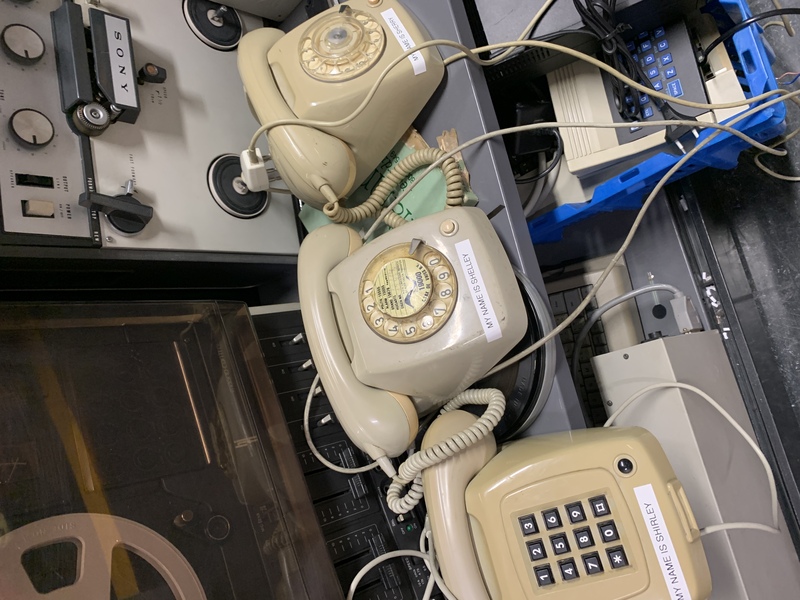
I was researching T65s(T65 is a model of landline telephone made, design, manufactured by PTT) in 2024 with my friend Fred because we wanted to hack it into a complaint line. The idea was if you were ever frustrated by any bureucratic process, you could pick up Sassie the telephone and vent away. We used this code from Mark's kitchen for the basis of our project: Rotary Phone Running Linux.
For this project, I did some hardware work and a lot of documentation. For the first resurrection public moment, I chose to again use the T65's, because this time I have had visited the Houweling Telecom Museum and was way more interested in the local history of teleocmmunication devices.
For a while I diddled around with the innards of the telephone until I decided to look into creating a Party Line!!. I really loved this idea and wanted to make the simplest circuit in order to achieve the intended result; 2+ people pick up different telephones and they can hear each other.
For the research, I watched every youtube video ever. Because I also wanted to make them ring if one of them is picked up, and this is achieved by many makers. I couldn't crack it by myself, I even asked for help from the head of volunteers at Telecom Museum, Arnold. He told me to use a microcontroller, I also didn't want to do that... but with circuitry it was too complicated for me.
He also gave me a HomeVox, picture on the right. 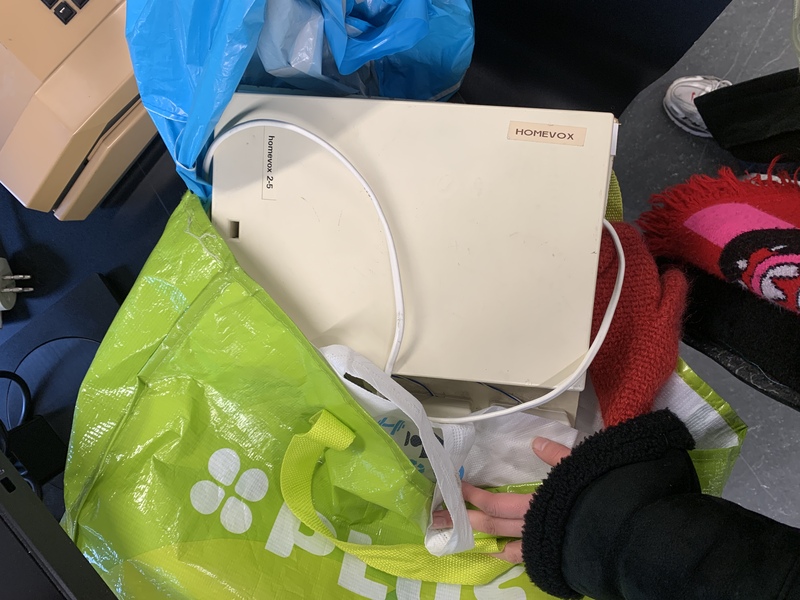 Apparently this was the OG home-party-line system.
If you connect the telephones to the Homevox, you can dial 1-2-3-4 to ring the other phones and
they will be connected together.
I really wanted to use this little mystery box(I wasn't allowed to open inside and had to bring
it back after the expo) but we played with it enough to realise the phones connected are not
connected to all phones only those who call and answer each other are connected.
Only 2 people could speak to each other at the same time... Not quite my tempo.
Apparently this was the OG home-party-line system.
If you connect the telephones to the Homevox, you can dial 1-2-3-4 to ring the other phones and
they will be connected together.
I really wanted to use this little mystery box(I wasn't allowed to open inside and had to bring
it back after the expo) but we played with it enough to realise the phones connected are not
connected to all phones only those who call and answer each other are connected.
Only 2 people could speak to each other at the same time... Not quite my tempo.
But I knew a Party Line is a very simple circuit system that connects the speakers of the receivers and powers the batteries of all mics of all receivers. That way, all mics are on, all speakers are on, and everyone can hear each other. Essentially two cups and a wire and a power source.
If you want to connect telephones together and have a dialing system amongst them, this is also relatively easy, because there is something called a Private Branch Exchange(PBX) box which was the system hotels used before cellphones became widely used. You can connect landlines into a PBX box and plug the box in, all the phones connected should work and be able to call each other. Here is where I found out about it:Intructables :) In this tutorial the author keeps talking about how cheap it is to make this, but in reality it is at least 50-60 euros to get a PBX box, yes much cheaper than 2003 when it was a luxurious network system but now it is still very pricey for 1 project.
What I wanted to do could be achieved with an Intercom system or an Apartment Doorbell system. Old school intercom systems are very cheap on Vinted, might need a little repair but they would have worked for sure. Apartment Doorbell systems were very tempting, but very expensive. Plus this is not what I wanted.
Homemade hot line system(this one helped me the most): https://www.youtube.com/watch?v=zwUS1_Hs6p4
Telephone PBX (shows inside of an old school PBX) https://www.youtube.com/watch?v=fsnp9DrMAFo
Telephone intercom system (Mutual ringing available)(first tutorial person again, nice but I don't understand why he replaced batteries with a hand cranking system, still very fun, didn't help me though): https://www.youtube.com/watch?v=tKUcQPrIjS8
Multi-Line Telephone Intercom (this one is the ONE tutorial with a Dual-tone multi-frequency (DTMF) signaling decoder. This one is important to watch if you want to know HOW exactly an intercom system works)https://www.youtube.com/watch?v=BGbmFF56iH8
How To Make A Telephone Party Line/Intercom System (This is the one I used the most to look at and try to understand how the cables are connected) https://www.youtube.com/watch?v=8jHrw1tfMso
I built an intercom from vintage rotary phones!(This guy is crazy, the tutorial is absolutely flawless but has so many steps its impossible to recreate without the help of someone who knows circuitry) https://www.youtube.com/watch?v=0nVkSxVJ2kk
Building a Plain Old Telephone Service (POTS) Intercom (very cool tutorial and helped me a lot because the wires are showing, he also tries the ringing but also doesn't make them work with each other, inspiring) https://www.youtube.com/watch?v=E2ytI7DknaY
PBX + VOIP tutorial:
https://www.youtube.com/watch?v=Id_KGXMcJHk&t=90s
Instructables PBX tutorial:
Cheap and Easy Guide to Building a Private Telephone System (he really tries to help, but at the end he doesn't really show what connects where and how does it even work? very confusing, but very informative)https://www.instructables.com/Cheap-and-Easy-Guide-to-Building-a-Private-Telepho
The Circuit
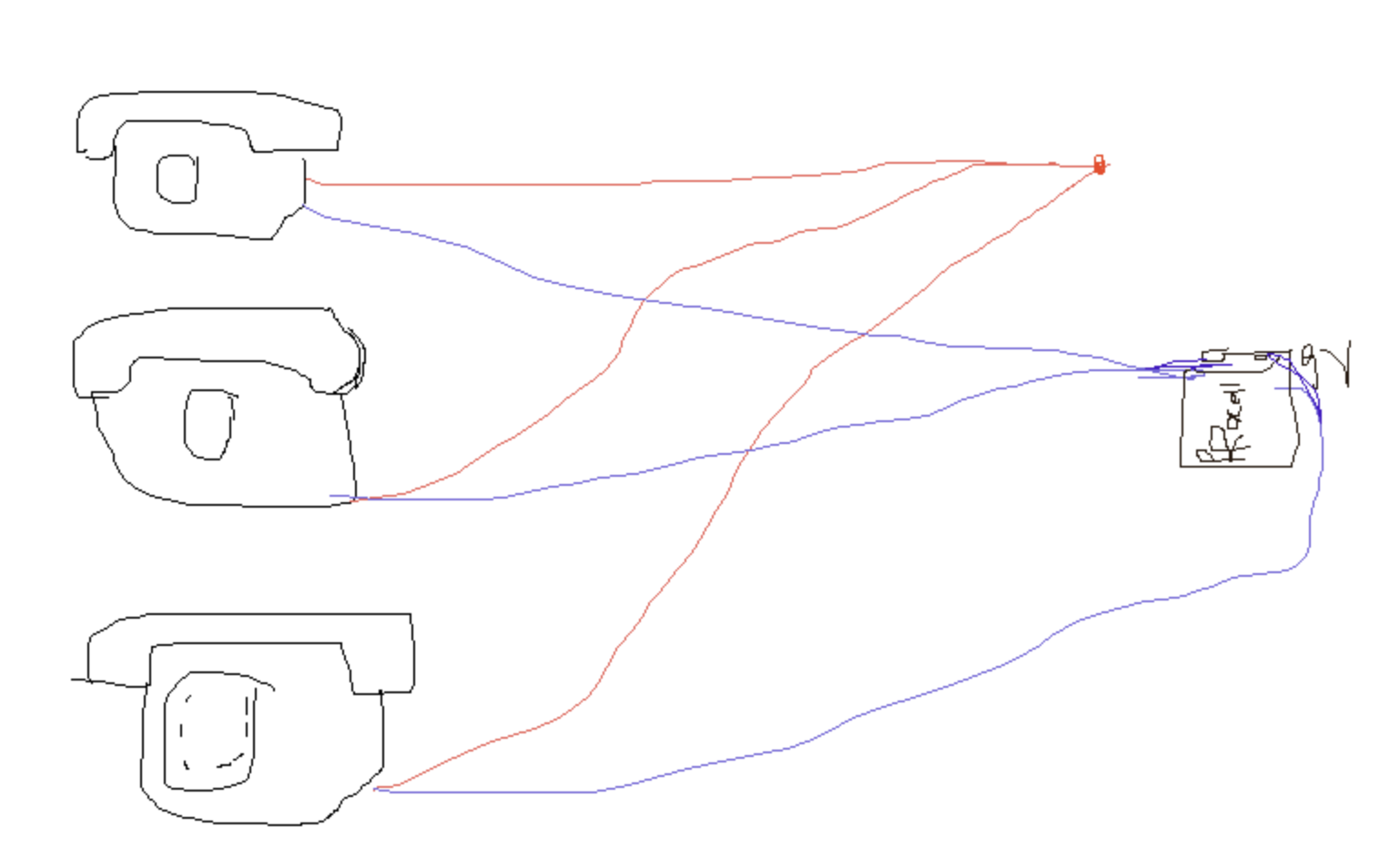
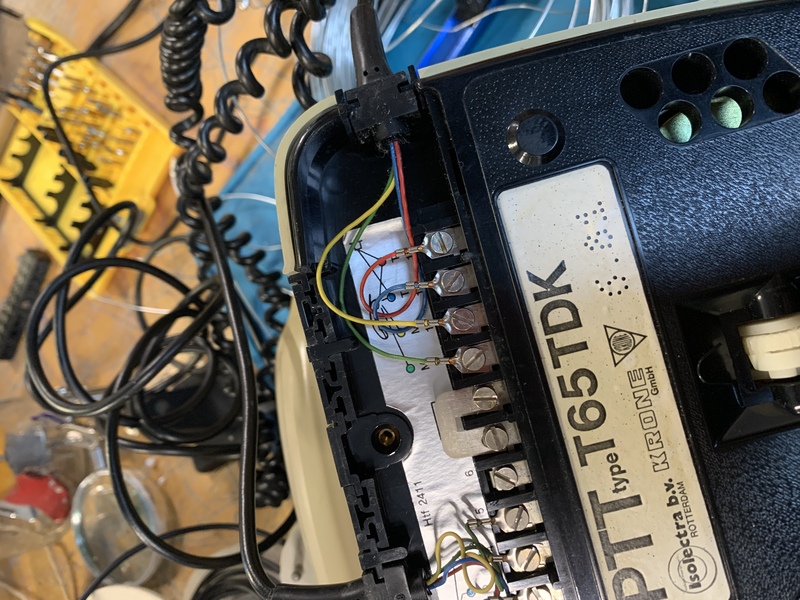
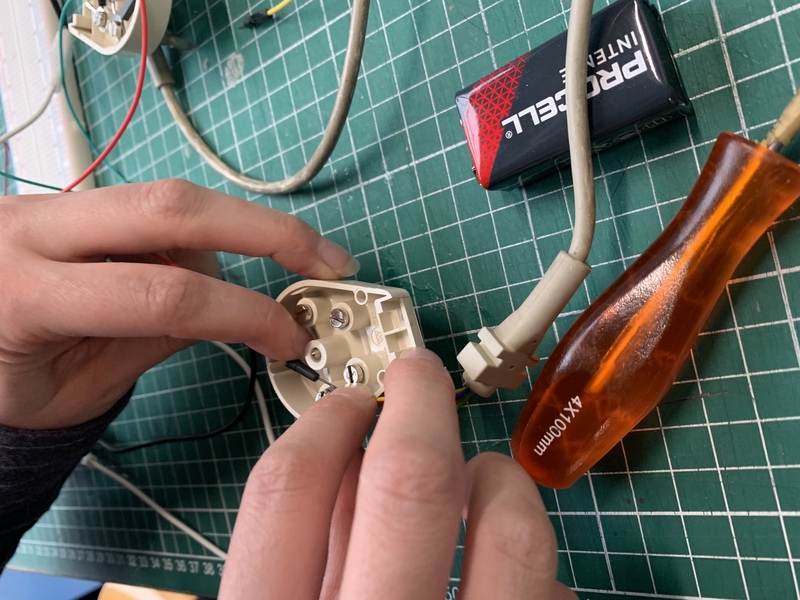
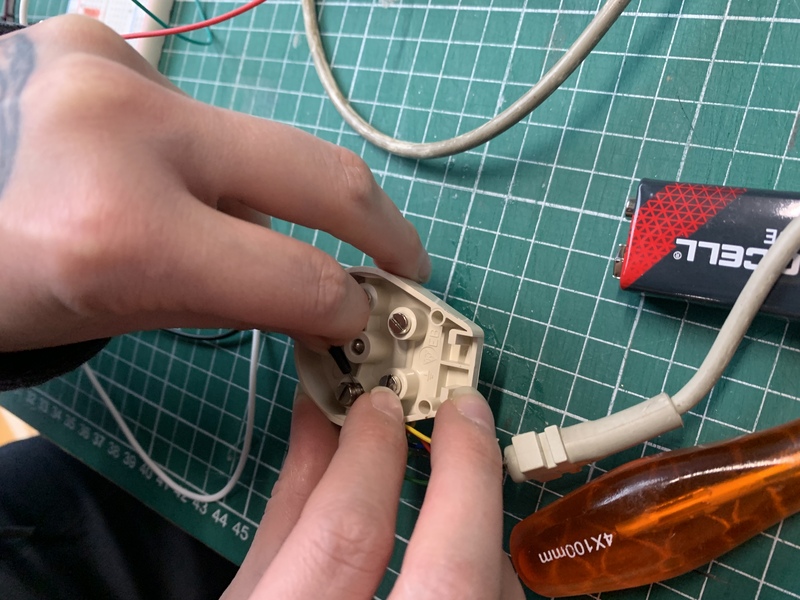
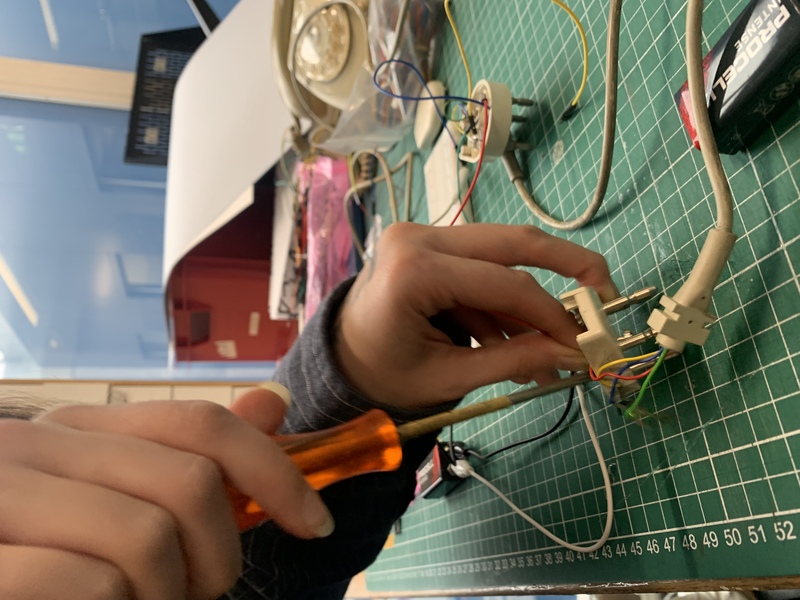
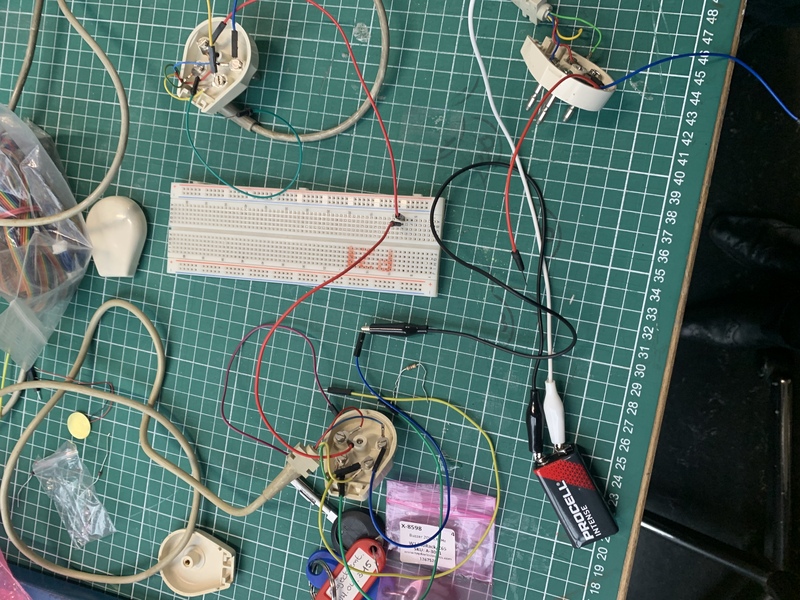
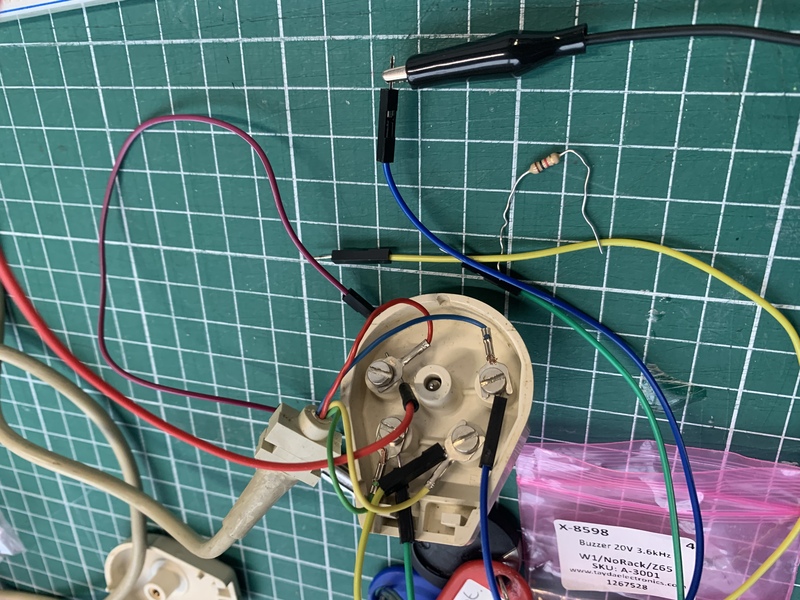
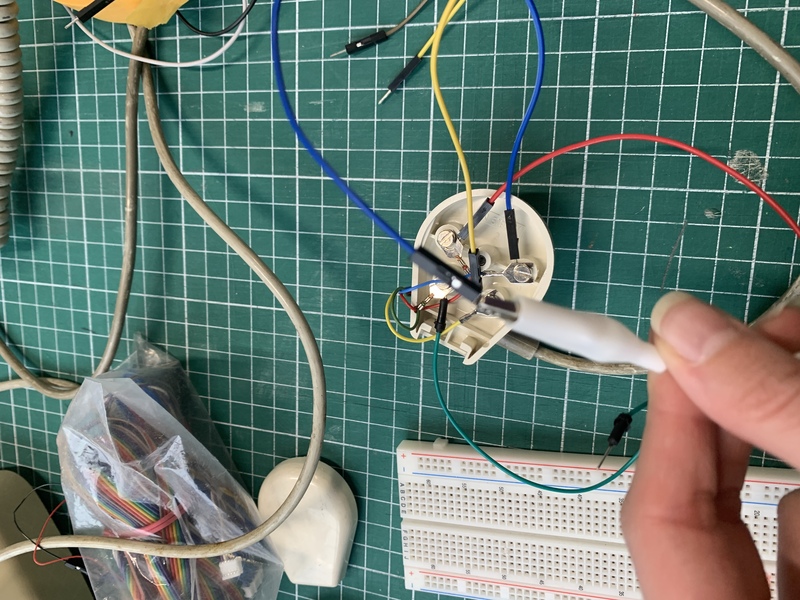
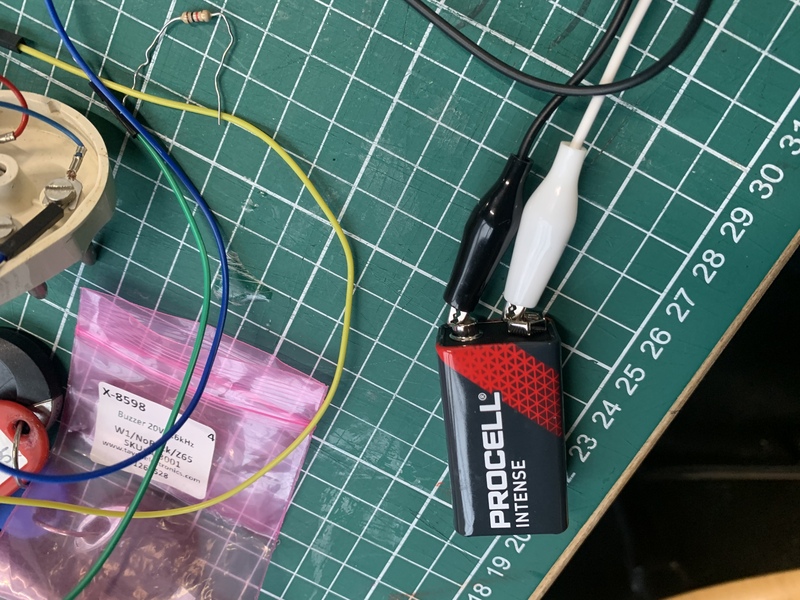
I opened up the little latch behind the T65, not the big one. there, you can the cables that go into the power cable. This cable actually handles microphone, speaker, the landline and the power. We connect the power lines to a 9Volt (I combined two to make 18) and the microphones to each other so everyone can hear each other. I was surprised that there were no other simple explanations I find online for this... Very strange. This is basically a middle school science experiment.
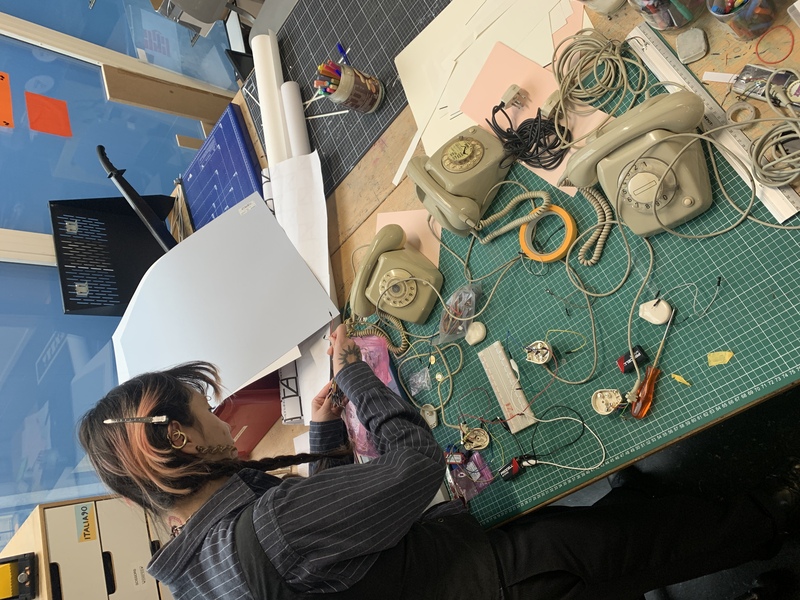
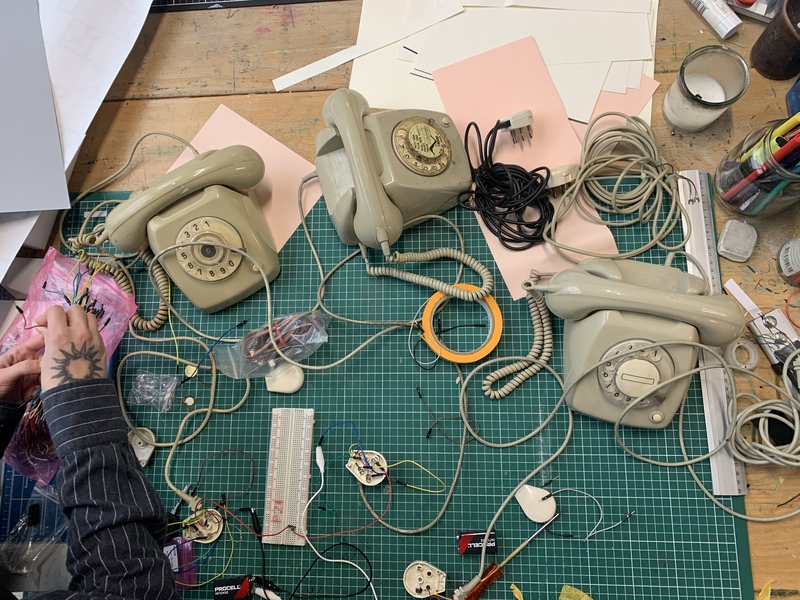
Other Party Lines :)
My absolute favorite is FUTEL. Based in Portland, they have a very sturdy practice. They have a zine called Party Line which is how I found them. Check the zines out here.
Another example I really love is not really an example it's from Lori Emerson's book Other Networks. Party Line is in there as a network but also there is something called a Barbed Wire Telephone which is essentially the same thing, very interesting read. PDF here.
Public Moment
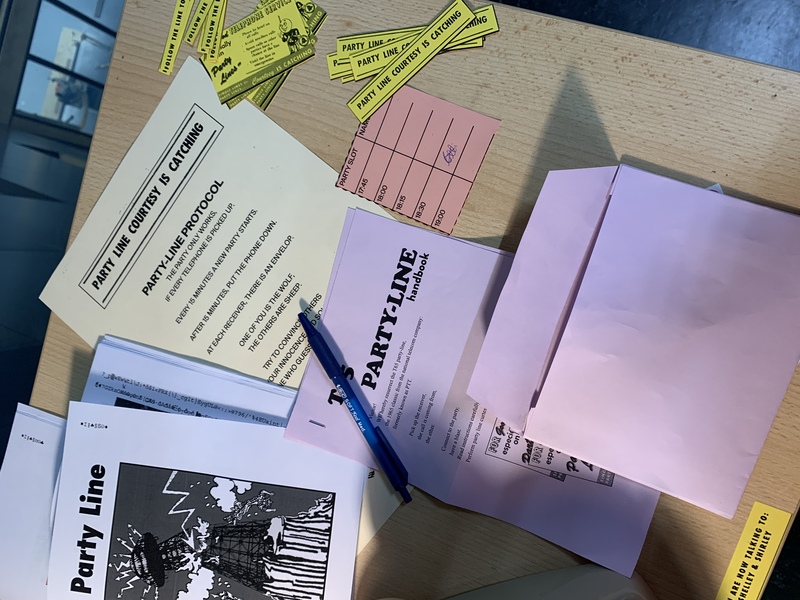
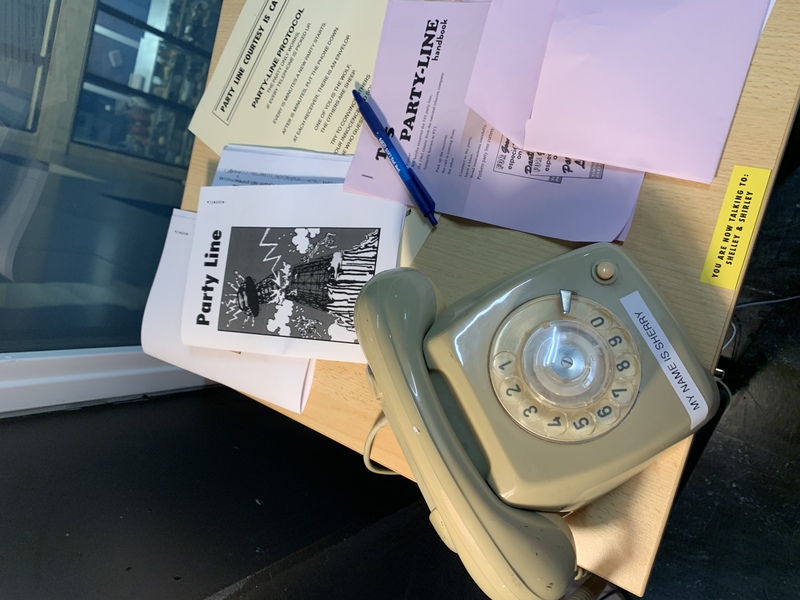
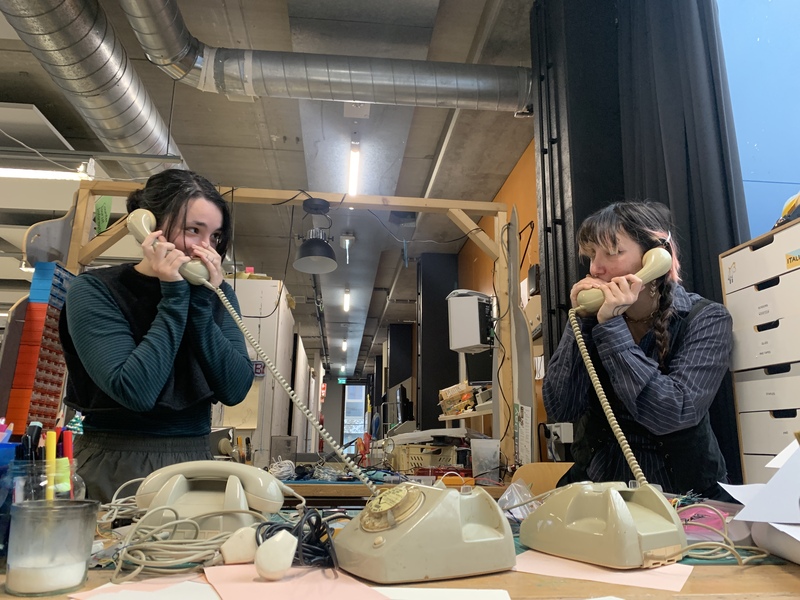
My setup was 3 telephones faar away from each other, they all had cards and instructions around them to indicate there is a game. People could book slots to play the game(no one really did...). This was for sure a failure in making public, the engagement was very limited and when people started to show interest it was 3 hours into the night and we were already building down.
It was really fun(in hindsight) though was the fact that as soon as I removed the phones from the desk I was working on, I forgot how they worked and the circuit stopped responding. Thank god Fred was there to tell me what to do(he told me to start over because I was trying to fix minor errors that might be causing a bigger error). In the end, because it broke in such a stressful time, I re-memorized the inner workings. And this eventually lead me to understand things easier when we went to the Radio Museum. This line I prepared was no stranger to the NL. Back in the day, PTT decided to broadcast radio shows through telephones, easy peasy basically the same system I made but they intended to connect the speakers. The thing is, a speaker and a microphone are interchangable(I'm not sure how but you can make one out of the other). So when they actually started broadcasting, this lead to people hearing each other over the telephone. Very cool story I thought it was really funny they didn't foreseee that.